Blob Storage
Unstructured blobs of data include images, videos, and other files. Typically, these are stored in blob storage, and the core database stores metadata, e.g., blob URL.
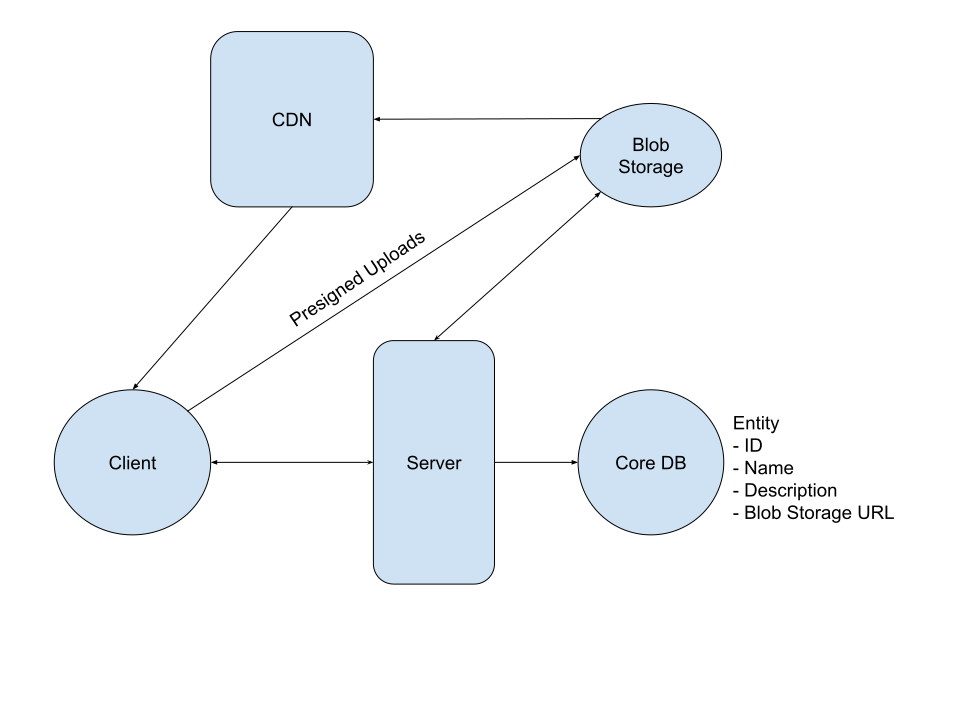
Common setup for large binary artifacts. Credits: Hello Interview.
Blob storage solutions like S3 can be considered infinitely scalable within your account limits. They are also cost effective, e.g., AWS S3 charges $0.023 per GB per month for the first 50TB, compared to AWS DynamoDB that charges $1.25 per GB per month for the first 10TB of storage.
Modern blob storage services also have a multipart upload API to support chunked uploads of large files. This allows the uploader to resume if the upload fails partway through, or even upload the chunks in parallel to save on time.
Typical Scenarios
To upload:
- The client requests a presigned URL from the server.
- The server returns a presigned URL to the client, recording it in the DB.
- The client uploads the file to the presigned URL.
- The blob storage notifies the server that the upload is complete, and the status is updated.
… where a presigned URL is a time-bound cryptographically signed URL that provides temporary access to the blob storage.
To download:
- The client requests a specific file from the server.
- The server returns a presigned URL.
- The client uses the presigned URL to download the file via the CDN, which proxies the request to the underlying blob storage.
References
- System Design Key Technologies. www.hellointerview.com . Accessed Jul 14, 2026.